This is not a paperwork problem. It is a documentation problem in the highest-stakes meeting in public education — the one where a child's services, placement, and future are decided, and where the law assumes the team can later prove exactly what was agreed.
The IEP Meeting Problem
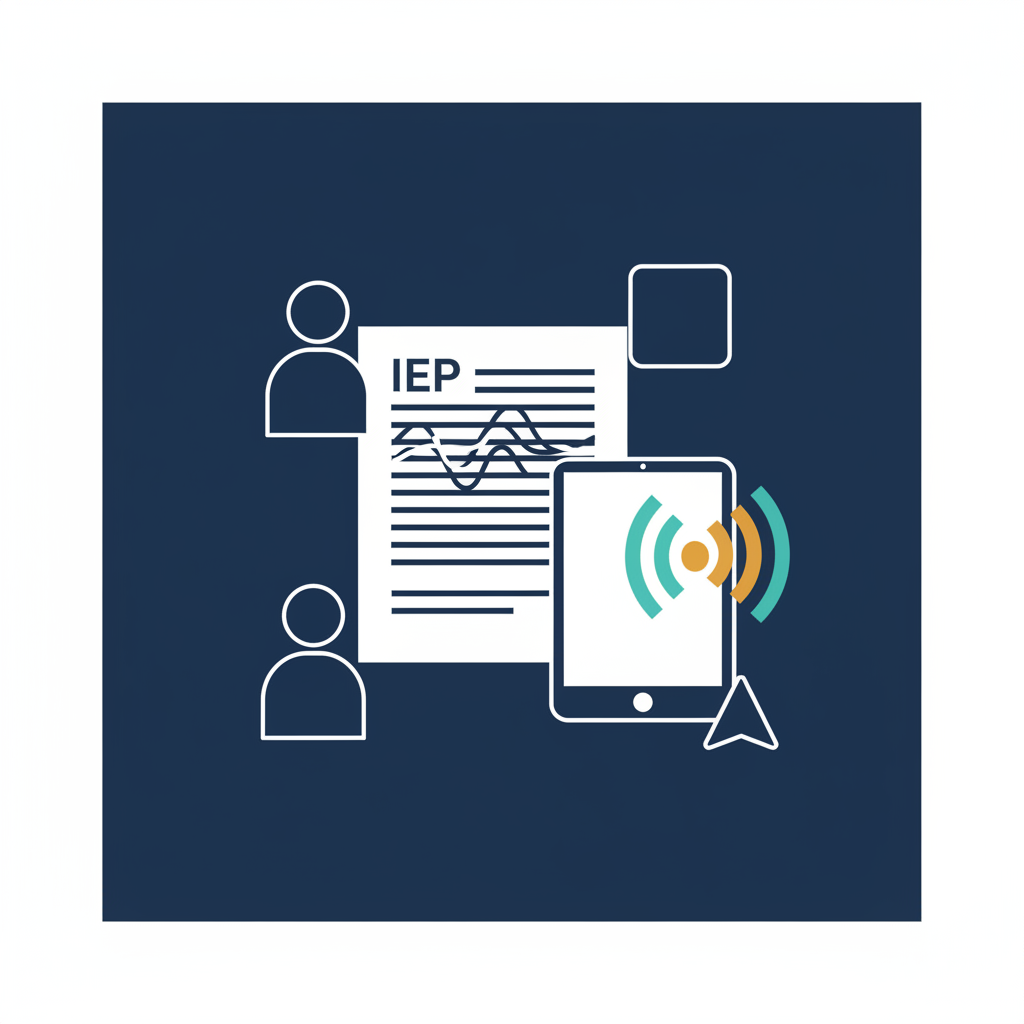
The IEP is a legally binding document under the Individuals with Disabilities Education Act, but the meeting that produces it runs on conversation, and the form captures only a fraction of what is said. The services grid, the goals page, and the signature line are the residue of a ninety-minute negotiation. Everything that explains why the team landed where it did — the give and take, the parent's reasoning, the clinician's recommendation — lives nowhere on the form.
A mid-size district holds thousands of these meetings a year. A single case manager may run 30 to 50 annual reviews each spring, each with five to eight participants negotiating in real time while a child's services hang in the balance. The volume alone guarantees that detail gets lost; the emotional weight of the conversations makes it worse, because the people in the room are managing relationships, not transcribing.
The information loss is severe and structural:
- Verbal service commitments never make the document. "We will add 30 minutes of OT per week" gets said, the team nods, and it never lands in the services grid. The parent leaves believing it was promised; the district later has no record that it was.
- The reasoning behind placement decisions disappears. Why the team chose a particular least restrictive environment over the alternatives is gone by the time anyone questions it — which is exactly when a defensible rationale matters most.
- Parent concerns get paraphrased, not captured. Prior written notice is supposed to reflect what the parent actually said. Memory blurs it within days, and the PWN that goes home is the team's summary of the parent rather than the parent's own words.
- Cross-meeting continuity breaks. What was promised at the annual review is forgotten by the amendment meeting two months later, and the thread connecting one decision to the next is lost.
Why the Stakes Are Different Here
IDEA builds an entire layer of procedural safeguards on the assumption that disagreements will be resolved by the record. Due-process hearings, state complaints, and mediation all turn on what the team can document. When the record is a thin form and competing recollections, the district is litigating from memory — and a parent's advocate who took careful notes will almost always have the stronger paper trail.
The cost is not only legal. A child whose agreed services quietly fell off the grid loses instructional time that is genuinely hard to recover. The documentation gap is a compliance liability and an educational one at the same time.
Why Current Solutions Fail
- The case manager cannot facilitate and transcribe at the same time. Running an emotionally charged meeting and capturing a verbatim record are two full-time jobs, and the record always loses. The person most responsible for the meeting's outcome is the worst-positioned person to document it.
- IEP software stores the form, not the conversation. District platforms hold the final document and the compliance timeline. They do nothing for the ninety minutes of discussion that produced it.
- Handwritten notes are incomplete and contested. A parent's advocate and the district's notes rarely match, and a he-said-she-said dispute is precisely what IDEA's procedural safeguards exist to prevent.
- Generic meeting bots are a FERPA problem. Most send student audio to vendors who may train on it. You cannot put a child's disability discussion — protected education records by definition — on an unknown server.
What Actually Works
Effective IEP documentation needs three things working together: accurate transcription, secure capture that respects student privacy, and AI that turns raw audio into the artifacts the compliance process actually needs.
Transcription that handles special education vocabulary
AmyNote uses OpenAI's latest Speech API, which gets terms like FAPE, least restrictive environment, present levels of performance, functional behavioral assessment, and extended school year right the first time. A transcript that mangles the statutory vocabulary is not a record a hearing officer will credit; a clean one is. Domain accuracy is what turns a recording into a usable part of the student's file.
Speaker identification across the full team
AmyNote's cross-session speaker memory tags the same case manager, school psychologist, therapist, and parent consistently across the annual review, the amendment meeting, and next year's review. When prior written notice needs to attribute who proposed what, it knows. That attribution is what lets a team show not just what was decided, but who raised it and how the parent responded.
Structured AI summaries built for the IEP process
Anthropic's Claude Opus generates a per-meeting brief with the structure teams actually need: proposed goals, agreed service minutes and their owners, accommodations, parent concerns in their own words, and follow-up dates. Search across a student's entire history surfaces every mention of a specific service or goal in seconds — so the team can answer "what did we commit to in the fall" without re-reading three years of files. The case manager walks out with a draft PWN instead of a stack of audio.
Privacy architecture a district can defend
Both OpenAI and Anthropic contractually guarantee zero training on user data. Audio is encrypted in transit; processing copies may be retained to deliver and recover requested features. All transcripts and recordings are stored locally on the case manager's device with encrypted transport. No student disability audio sits on a third-party server, and no protected record feeds a model-training pipeline. For a district whose FERPA obligations are non-negotiable, that posture is what makes the tool usable at all.
What Changes After One Review Cycle
Teams that try this on a single annual review notice the change on the back end first: the PWN drafts faster, the services grid matches what was actually agreed, and the case manager stops reconstructing the meeting from a legal pad at 6 PM. The deeper shift shows up at the next meeting in the sequence, when the amendment review opens with an accurate record of what the annual review promised — and the conversation moves forward instead of relitigating the past.
By the time a complaint or a state monitoring visit arrives, the difference is decisive. A documented, attributable, searchable record of what the team agreed and why is the file that withstands a due-process hearing. The reconstruction from memory is the file that does not.
Getting Started
AmyNote runs on the case manager's laptop or phone. Record the meeting with the team's knowledge, get a structured brief in minutes, and search every prior IEP meeting by service, goal, or speaker. There is a three-day free trial, no credit card required — enough to run it on a single annual review and see whether your next due-process file defends itself.
Originally published as an X Article.