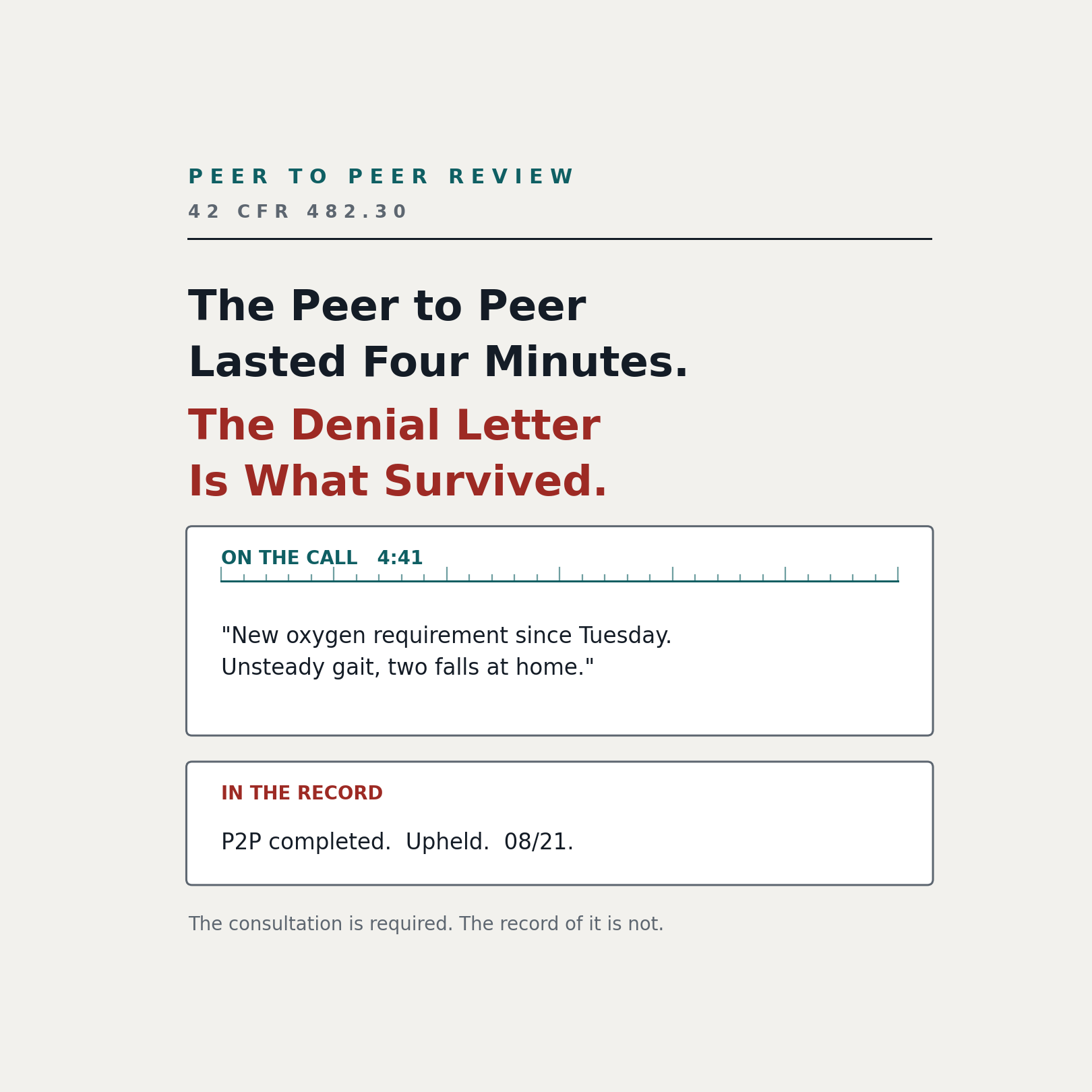
A Medicare Advantage plan denies prior authorization for a patient’s surgery. The surgeon’s prior-auth coordinator calls the plan the same afternoon, puts the surgeon on the line, and the surgeon explains why a 30-day wait could cost the patient function in one hand. The plan representative says the request is noted. Two weeks later nothing has moved, and the case file describes a routine request.
Nobody has to be acting in bad faith for that to happen. The representative may have typed a short note and moved to the next call. The coordinator may have written “called plan, requested expedite” on a sticky note. But when the office tries to show that the physician asked for an expedited appeal, and said why, the only written account of the call is the one the plan wrote.
The Problem: The Urgent Appeal Is Spoken
Federal rules let the most time-sensitive Medicare Advantage appeals start by phone. To ask for an expedited reconsideration, an enrollee or physician “must submit an oral or written request directly to the MA organization,” under 42 CFR 422.584(b)(1). The next paragraph adds that “A physician may provide oral or written support for a request for an expedited reconsideration.”
What the physician says on that call carries real weight. Under 422.584(c)(2)(ii), the plan must expedite “if the physician indicates that applying the standard timeframe for conducting a reconsideration could seriously jeopardize the life or health of the enrollee or the enrollee’s ability to regain maximum function.” For a request made by the enrollee alone, under (c)(2)(i), the plan decides that question itself. For a physician, the words on the call are the trigger.
What turns on the call:
| What is at stake | Rule | What it depends on |
|---|---|---|
| The 72-hour clock | 422.590 | A decision “no later than 72 hours after receiving the request” |
| The 60-day filing window | 422.584(b) | A request filed “within 60 calendar days after receipt of the written organization determination notice” |
| The filing date | 422.584(b)(4) | The request “is considered as filed on the date it is received by the plan” |
| Appeal or grievance | 422.564(b) | The plan “must promptly determine and inform the enrollee whether the complaint is subject to its grievance procedures or its appeal procedures” |
Every one of these depends on the date and the words of a phone call. Which day the plan received it, and whether the physician said the words that make expediting mandatory.
What Happens If the Plan Says No to Expediting
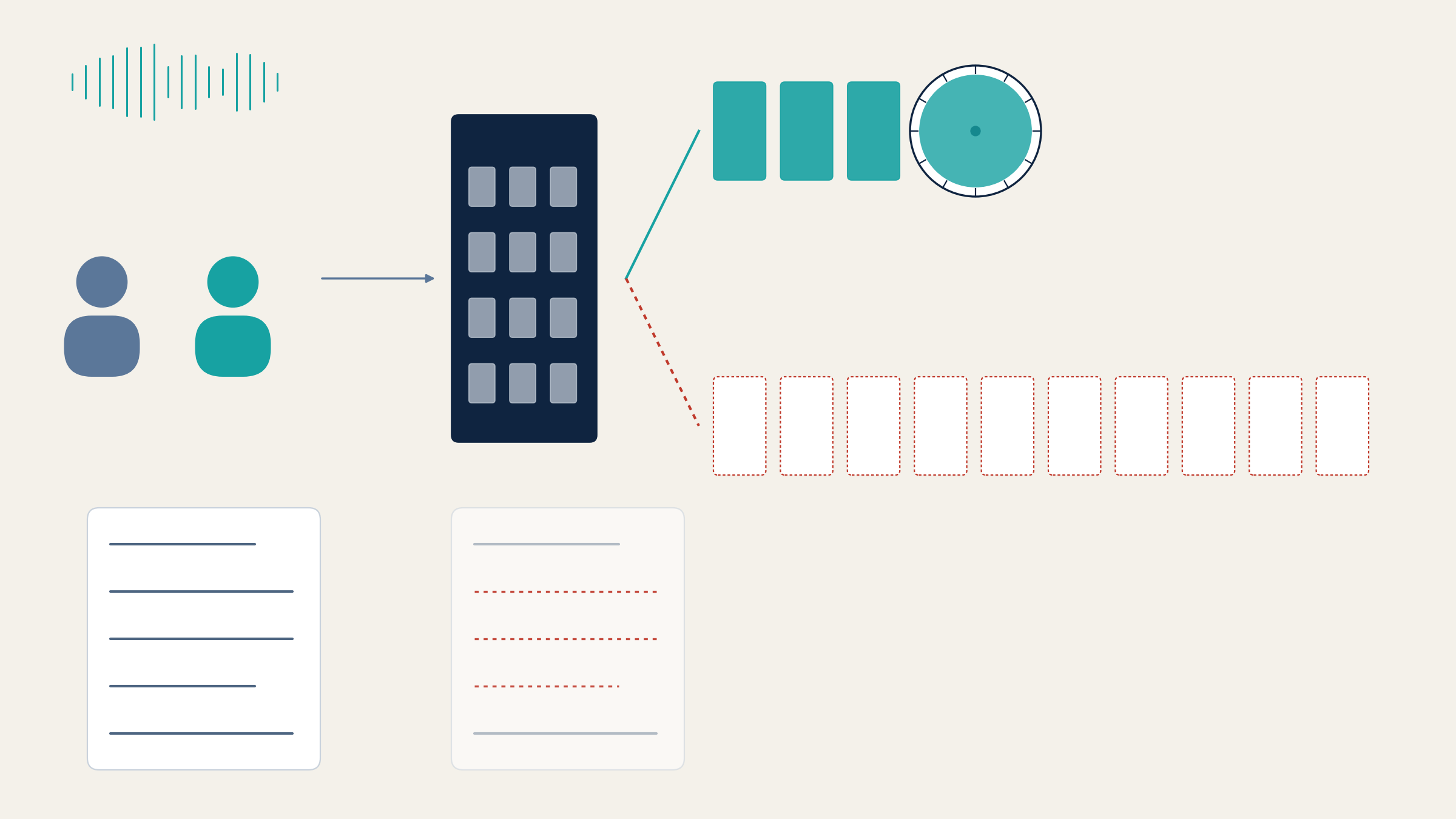
A denial of the expedite request is not the end of the appeal, but it changes the clock. Under 422.584(d)(1), the plan must “Automatically transfer a request to the standard timeframe,” and “The timeframe begins the day the MA organization receives the request for expedited reconsideration.” So even on the slow track, the date of the original call still matters.
The plan also has to tell the enrollee. Under 422.584(d)(2), it must “Give the enrollee prompt oral notice, and subsequently deliver, within 3 calendar days, a written letter,” which among other things informs the enrollee of the right to file a grievance and of “the right to resubmit a request for an expedited reconsideration with any physician’s support.”
That last point is the practical one. If the first call did not get the physician’s words on the record, the office can call again with the physician on the line. Knowing exactly what was said the first time is what tells you whether you need to.
Why Current Solutions Fail
The rules do require a record of the oral request. Under 422.584(c)(1), the plan must “document all oral requests in writing, and maintain the documentation in the case file.” The same duty applies to expedited initial requests under 422.570(c)(1).
The problem is who holds the pen.
- The plan writes the note. The record of the request is written by the organization whose denial is being appealed.
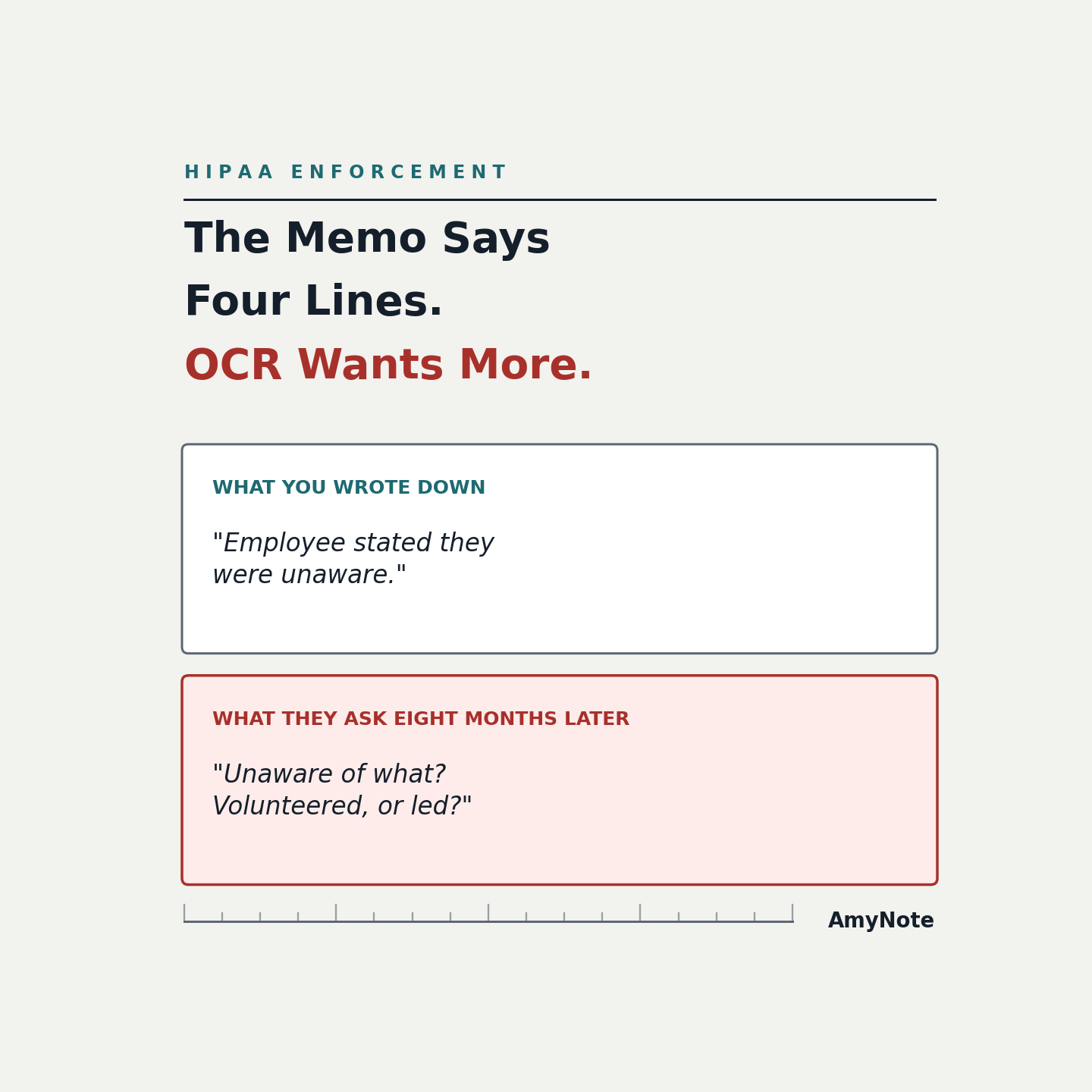
- Paraphrase loses the trigger. “Provider requests expedite” and “the physician indicates the standard timeframe could seriously jeopardize the enrollee’s ability to regain maximum function” produce very different outcomes.
- Grievance logs keep dates, not words. Under 422.564(g), plans track grievances “including, at a minimum, the date of receipt, final disposition of the grievance, and the date that the MA organization notified the enrollee of the disposition.”
- Standard requests are a policy choice. Under 422.582(a), standard reconsiderations are written, but “The MA organization may adopt a policy for accepting oral requests.” Whether a call counted depends on a policy the caller rarely sees.
The rules also protect the physician who makes the call. Under 422.584(f), a plan “may not take or threaten to take any punitive action against a physician acting on behalf or in support of an enrollee in requesting an expedited reconsideration.” That is a strong reason for physicians to speak plainly on these calls, and one more reason for the office to have its own record of what was said.
What Actually Works
The fix is a verbatim, timestamped record of the request call on your side, made openly and with everyone’s consent.
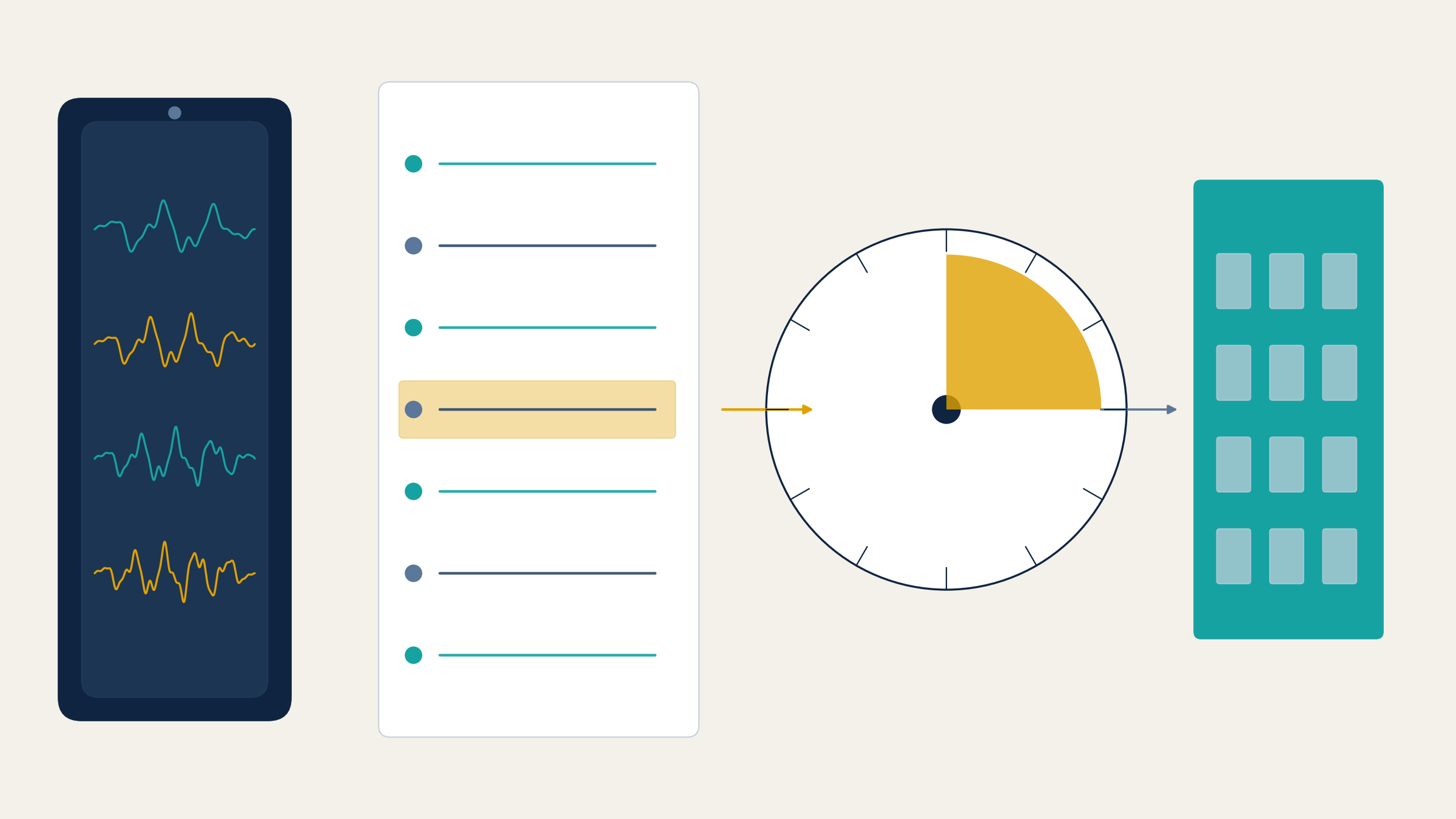
Record the call in the room. AmyNote runs on the iPhone a case manager, prior-auth coordinator or patient advocate already carries. Put the plan on speaker, tell the representative the call is being recorded, and follow your state’s consent law and your organization’s policy.
Capture the clinical words. Transcription runs on OpenAI’s latest Speech API, which holds up on the language these calls turn on: expedited reconsideration, organization determination, regain maximum function, prior authorization and the reference number the representative reads back.
Keep the speakers straight. Speaker identification separates the physician, the coordinator, the patient and the plan representative, and remembers them across follow-up calls on the same case.
Find the sentence that mattered. AI analysis runs on Anthropic’s Claude Opus. Ask it where the physician described the risk of waiting, and you get the quote and the timestamp to compare with the plan’s note.
Privacy stated plainly. Transcription runs through OpenAI and Microsoft Azure speech services, and AI analysis through Anthropic. AmyNote states that it does not use customer data to train AI models and does not sell content. Audio and text are encrypted in transit with TLS, and the saved library stays on the user’s own iPhone or iPad, where recording, playback and export work with no network.
Local first is not local only. When transcription or a summary runs, the needed audio or text is uploaded, and a processing copy may be retained to complete the request. AmyNote publishes that trade-off rather than hiding it. AmyNote does not offer HIPAA compliance, so whether it fits your organization’s rules for protected health information is a decision for your compliance team before you record a patient call.
A Short Checklist for Expedited Request Calls
- Have the denial notice in front of you, so the date and reference number are on the recording.
- Get the physician on the line, or have the physician’s support ready, since a physician’s request or support is what makes expediting mandatory.
- Say the words plainly. Ask for an expedited reconsideration, and have the physician state that the standard timeframe could seriously jeopardize the patient’s life, health or ability to regain maximum function.
- Ask how the call is being classified, as an appeal or a grievance, and ask the representative to read back what they entered.
- Note the time. The 72-hour clock runs from receipt, so write down when the call ended and check back before it runs out.
What This Does Not Decide for You
A recording does not decide whether the plan’s denial was right, and it does not replace the appeal procedures in the plan’s notice or legal advice. Consent rules for recording phone calls differ by state, and health systems have their own policies for recording calls that involve patient information. What a verbatim record does is make sure that, when the date or the words of a request are in dispute, the office is not relying on the plan’s note alone.
Getting Started
Pick one kind of call, such as expedited requests after a prior authorization denial, and record them with consent for a month. Then compare each transcript with the plan’s written account of the request. AmyNote offers transcription by OpenAI, analysis by Anthropic’s Claude Opus, zero-training commitments from both, and a three day free trial with no credit card.
Originally published as an X Article by @AmyNoteApp.