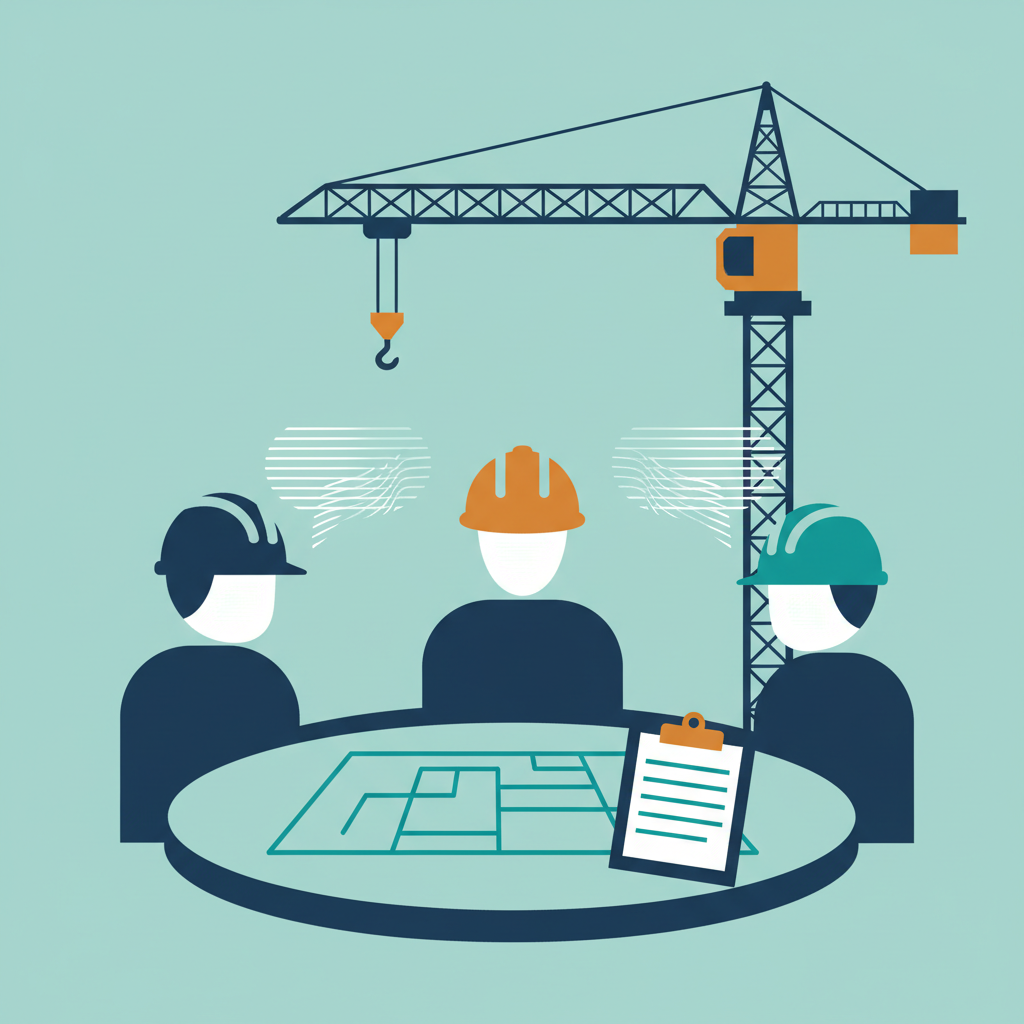
A project manager approves a foundation design change during a site meeting. The structural engineer agrees verbally. Three subcontractors adjust their timelines based on what they heard. Six weeks later, the owner disputes the $180,000 cost overrun. Nobody has a written record of who approved what, when, or why.
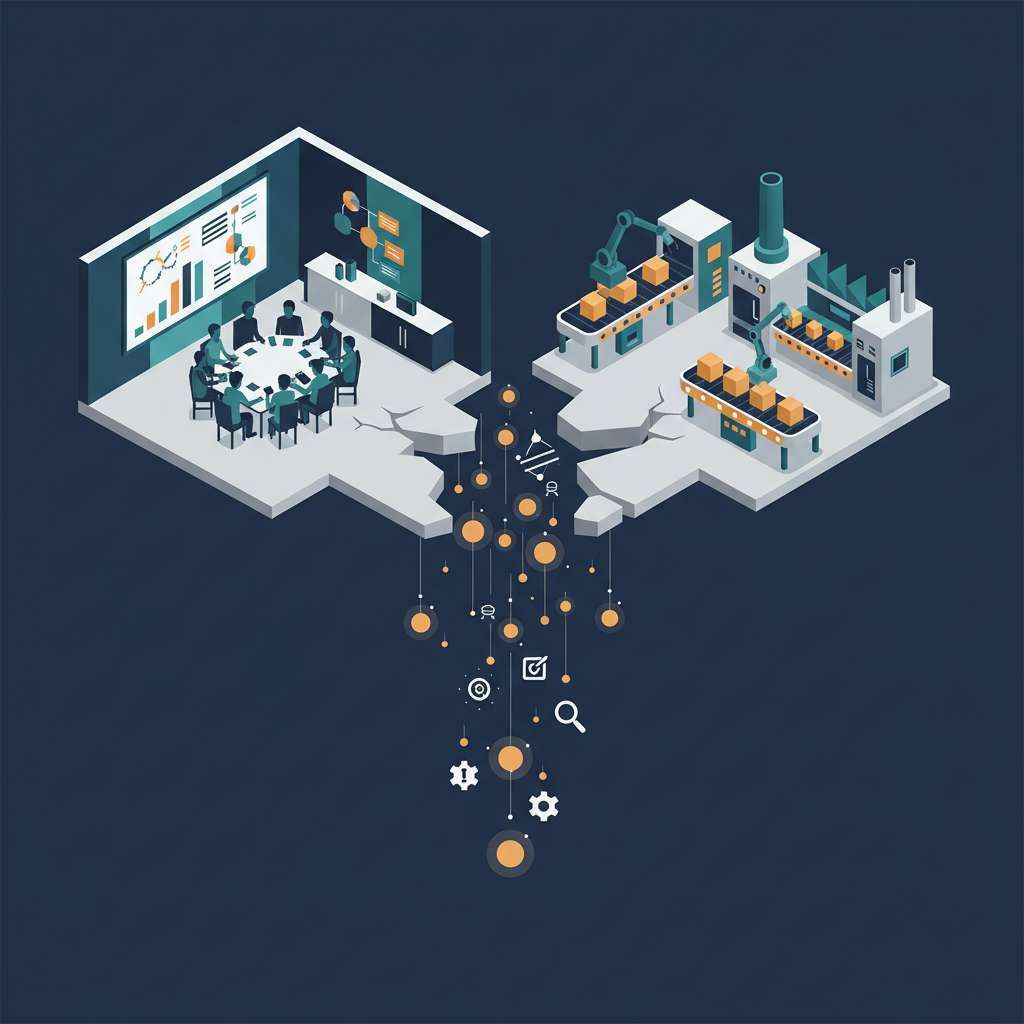
This scenario plays out on construction projects every week. The industry runs on meetings — OAC meetings, pre-construction kickoffs, safety briefings, RFI walkarounds — but the documentation rarely captures what actually gets decided. The gap between what was said and what was recorded is where disputes, delays, and liability live.
The Documentation Gap on Construction Sites
Construction generates more verbal decisions per project than almost any other industry. A typical commercial project involves 15-25 weekly coordination meetings across owners, architects, contractors, and subcontractors. Each meeting produces scope clarifications, scheduling commitments, and safety directives that affect millions of dollars in work.
The standard documentation method? Someone takes handwritten notes, types them up hours or days later, and distributes meeting minutes that capture maybe 60% of what was discussed. Critical context vanishes — the tone of a safety concern, the specific wording of a scope limitation, which subcontractor raised the scheduling conflict.
Change orders are the worst offender. The Construction Industry Institute estimates that change orders account for 5-10% of total project costs on average. Many originate as verbal agreements in meetings that later become contested when the price tag arrives. Without a timestamped, attributed record of who said what, resolving these disputes comes down to one person's memory against another's.
The problem compounds across the lifecycle of a project. A 12-month commercial build might generate hundreds of verbal commitments across dozens of meetings. By the time a dispute surfaces — often months after the original conversation — the people who were in the room may have moved to different projects, and the notes from that meeting are a half-page summary buried in a shared drive.
Why Current Approaches Fail
- Handwritten notes miss technical detail. Construction meetings move fast across structural, mechanical, electrical, and plumbing disciplines. No single note-taker captures HVAC load calculations, concrete PSI specifications, and scheduling dependencies simultaneously. The note-taker inevitably prioritizes one discipline over others, and the gaps become invisible until they cause problems.
- Meeting minutes arrive too late. By the time minutes circulate 48-72 hours later, subcontractors have already started work based on their own interpretation of what was agreed. When the official minutes finally arrive and contradict what someone heard, the rework is already underway.
- No speaker attribution. When a dispute arises, meeting minutes rarely document who made the commitment. "It was decided that..." protects nobody in arbitration. The passive voice in meeting minutes is not just a stylistic choice — it's a liability gap that strips accountability from decisions worth hundreds of thousands of dollars.
- Video call recordings sit unwatched. A 90-minute OAC meeting recording is useless without searchable transcription. Nobody rewatches the full video to find one decision. The recording exists, but it's practically inaccessible — a filing cabinet with no labels.
- Fragmented communication channels. Decisions happen across site meetings, phone calls, text messages, and emails. Even when individual conversations are documented, the complete picture of a decision — the context, the alternatives discussed, the conditions attached — lives across multiple channels and nobody owns the synthesis.
The Real Cost of Poor Documentation
The financial impact of construction documentation gaps extends far beyond the obvious cost of disputes. Consider the cascading effects:
Rework from misunderstood scope. When a verbal scope clarification isn't documented precisely, different trades interpret it differently. The mechanical contractor installs ductwork based on what they heard; the electrical contractor routes conduit based on their version. When the conflict surfaces during inspection, one or both systems need rework — at the project's expense.
Schedule delays from unclear commitments. A subcontractor agrees to accelerate their timeline during a coordination meeting. Three weeks later, they claim they agreed conditionally — only if materials arrived by a certain date. Without a verbatim record, the GC can't enforce the commitment, and the schedule slips.
Safety liability from undocumented directives. Safety briefings generate verbal directives that carry legal weight. If a safety concern is raised in a meeting and not documented, the project team has no record of the warning — or of the response. In the event of an incident, that missing documentation becomes a serious liability.
Claims and litigation. Construction disputes that escalate to arbitration or litigation depend heavily on contemporaneous documentation. Meeting minutes written days after the fact carry less weight than real-time records. Projects with poor meeting documentation spend more time and money resolving claims, and they lose more of them.
What Effective Construction Documentation Looks Like
Real-time transcription changes the equation. When every word in a meeting is captured automatically, the documentation gap closes. Project teams get a searchable, timestamped record of every commitment, clarification, and directive — attributed to the person who said it.
AmyNote handles this with OpenAI's latest Speech API for transcription, which accurately captures construction-specific terminology: R-values, rebar schedules, ASTM standards, curtain wall specifications, Procore references. The transcription runs in real time, even during in-person site meetings where a laptop or phone sits on the table.
Speaker Identification for Multi-Party Meetings
Speaker identification matters here more than most industries. When an owner's rep, a GC superintendent, and three trade contractors are in the same room, knowing who approved what is the difference between a resolved RFI and a six-figure dispute.
AmyNote's cross-session speaker memory recognizes voices across meetings, so "John from mechanical" stays labeled correctly whether it's the Tuesday coordination meeting or the Thursday safety briefing. Name the participants once, and every subsequent meeting with the same people is already labeled. No manual tagging, no post-meeting cleanup.
AI-Powered Summaries and Action Items
AI-powered summaries built on Anthropic's Claude extract the structure. After each meeting, teams get organized action items, decisions made, open RFIs discussed, and schedule impacts identified — without anyone manually sorting through notes. The AI understands the difference between a firm commitment and a tentative discussion, so the summary reflects what was actually decided versus what was merely explored.
For project managers, this means the meeting minutes are ready to distribute within minutes of the meeting ending — not 48-72 hours later. Subcontractors get the official record while the conversation is still fresh, reducing the window for misinterpretation.
Searchable Project History
Six months into a project, when a dispute arises about a scope decision made during pre-construction, the project team can search across all meeting transcripts for exactly what was said. Natural language queries like "What did the owner say about the curtain wall spec in January?" return exact quotes with timestamps and speaker attribution.
This transforms the project's meeting archive from a collection of sparse summaries into a comprehensive, searchable knowledge base — the kind of documentation that holds up in arbitration.
Privacy Architecture
Privacy architecture keeps project data secure. Both OpenAI and Anthropic contractually guarantee zero training on user data. Audio is encrypted in transit; processing copies may be retained to deliver and recover requested features. Transcripts are stored locally on the project team's device with encrypted transport. Cloud processing copies are handled under the controls described in AmyNote’s Privacy Policy. No bid numbers or cost estimates feeding into model training pipelines.
Getting Started
Construction teams that switch from manual meeting minutes to AI-powered transcription typically recover 5-8 hours per week in documentation time across their project management staff. More importantly, they build a defensible record of every verbal commitment, scope clarification, and safety directive — the kind of documentation that prevents disputes before they start.
AmyNote's transcription runs on OpenAI's Speech API with AI analysis powered by Anthropic's Claude — both with zero-training guarantees. Three-day free trial, no credit card required.
Originally published as an X Article. Expanded for the AmyNote blog.